
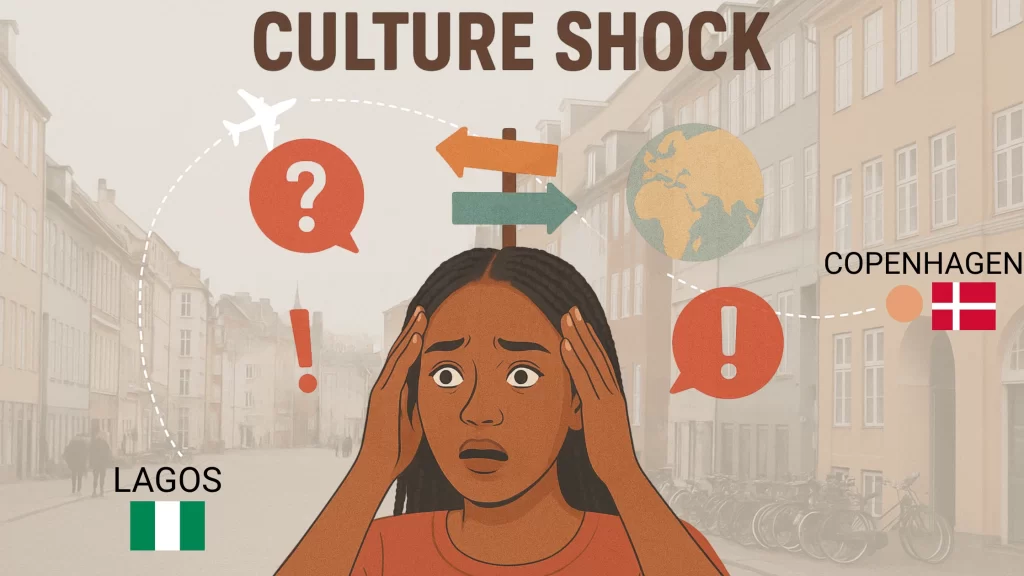
My experience as an African woman who has taken the leap to move to the Scandinavian country of Denmark has been eye-opening. It has been a journey of discovery, adaptation, and, at times, confronting uncomfortable realities. These realities include the weather, language barriers, a lack of sense of belonging, a slow acclimatisation process, subtle racism, and overt racism. All of which have tested my resilience in ways I didn’t expect.
For those of us from Africa or other parts of the world where community and hospitality are central to daily life, Denmark can sometimes feel cold and distant. However, the ability to transform these cultural shocks into pivotal tools that foster a life of fulfilment and success in this Scandinavian country is not only possible but also a testament to our strength and adaptability.
The Weather: Denmark Is Cold, Dark and Gloomy
In Denmark, everyone complains about the weather, no matter the time of the year, winter, autumn, spring, or summer. This is mainly because the weather does not always match the forecast. It may rain a great deal in autumn, spring, and summer. Summer can be extremely hot for some weeks or rainy the rest of the time. Spring is the best of all the seasons, but it also rains.
Coming from a warmer climate or a tropical region does not help when moving to any country in Northern Europe. It is cold, dark, and gloomy. It helps to research how cold it can be and prepare accordingly. No one prepares you for the shock you get.
When I arrived, it was late September, two decades ago. The locals were already wearing light jackets, and they told me it was not cold yet, but I was feeling the cold in my bones. This period was when Denmark was still getting a lot of snow, and not nowadays, when the atmosphere is warmer. No matter what layers of clothing you wear, you still feel cold from within, so I advise you to get your jackets and boots here in Denmark because they are already measured against the temperature here. Please save up for that and add it to your budget.
Prepare for what is called “winter depression”. This is more prevalent among people of colour living in colder climates than is being recorded. The reason is that the sun evokes joy in our hearts. Because all we have ever known in our tropical regions is sunlight that we took for granted. Then, the reality of dark days that last for months hit, and we recluse into our cocoons. Though we have tiny communities from which we could draw help. It is still easy to forget yourself and then wind up in deep depression. What helps, according to research, is vitamin D. Make sure you take this every day because of our darker skin. This may help with depression.
➡️ Find out more about Vitamin D here, Seasonal Affective Disorder (SAD) and tips on how to manage it here: 👉 NHS guide on SAD
Understanding the True Meaning of Hygge and Its Limits
When I arrived in Denmark, I kept hearing about “hygge,” the Danish concept of cosiness and comfort. For example, a Danish person would say, “Det er så hyggeligt herind.” This means it is so cosy here. At first, it sounded like a simple way to enjoy a cup of tea, light candles, and curl up with a blanket.
However, this concept needs a community for it to be truly meaningful. Maybe that of friends or family, because the idea can feel particularly isolating for someone without family nearby. Denmark, with its “cosy” aesthetic, sometimes lacks the warmth and inclusiveness that make these rituals meaningful for someone from an African background.
Adapting the Danish concept of ‘hygge’ to my needs, I found that it’s not just about personal comfort but connection. So, I’d have friends and family who share my values and understand me, to come for a get-together. With the small circle of friends I had made in Denmark, through churches and ethnic gatherings, I built a community around me. This community is not just for comfort but something necessary in a new country, helping you feel less isolated and more connected.
Cultural Differences in Communication: When Bluntness Crosses the Line
One of the first things I noticed about Danish culture was its straightforwardness. Danes are known for being direct, and while that can be refreshing in many situations, I found that sometimes their bluntness was a guise for open racism. This bluntness is prevalent in the rhetorics of some political parties in Denmark, where despite having been corrected on several occasions, has insisted on continuing to refer to a particular Danish dessert filled with cream and melted dark chocolate as “neger boller“, which can be transliterated to “Nigger buns”. To them, it is the preservation of their language and culture.
The unfriendly, friendly conversations
I’ve often been asked about my immigration status during casual conversations, and it’s usually uncomfortable and intrusive. These moments of bluntness can catch you off guard and demand a strong sense of self and some cultural awareness to handle them. I remember conversations where someone would ask if I liked living here and whether I originally came as an asylum seeker. The assumption behind the question that every dark-skinned immigrant must be an asylum seeker is hard to ignore.
When curiosity wears another cloak
It’s usually framed as curiosity or just being honest. But for someone who’s experienced different forms of racism, both obvious and subtle, these comments don’t feel like harmless questions. They feel a lack of respect for personal boundaries. What some people call “honesty” often crosses the line into something else. It’s not just bluntness. It’s a kind of everyday discrimination that can wear you down.
Many times, it’s clear that these comments wouldn’t be made about a Dane, and that needs to be addressed, especially as an African immigrant in Denmark. It is essential to set boundaries when faced with a bluntness that feels disrespectful or discriminatory. I learned to speak up gently but firmly and let people know when something was inappropriate.
An example was when someone touched my freshly washed afro hair without approval, not knowing where those hands had been. They initially asked for authorisation to touch my hair, and I declined. Still, they ensured they touched my hair, quickly retrieved their hands, and then claimed they were curious. This happened even after I had said no. I sternly, without mincing words, reiterated my displeasure with their behaviour. I told them I would never tolerate a repeat of that incident. They apologised because I was assertive about my right to be treated respectfully.
Having a community where you feel safe and respected matters. It’s not just about having people around you, it’s about having people who understand what you’re going through. A supportive group like Mino Danmark can make a big difference, offering emotional backup and helpful advice for everyday cultural challenges in Denmark.
Housing Challenges: Racism in the Rental Market
Housing can be one of the most exhausting parts of settling in for many Africans moving to Denmark. It’s not just the competition or high prices, but racism often adds another layer of difficulty. Some landlords don’t respond at all, while others openly say no without giving a real reason. These situations aren’t rare; they wear you down over time.
My experience searching for a Rental Home
Even though Denmark has a relatively transparent rental market, systemic racism can make it far more difficult for people of colour to secure a place to live. I experienced firsthand how landlords might reject an application because of a foreign-sounding name or a different skin colour. For example, I initially lived with my friend’s relative when I arrived. It was time to get my accommodation, so I called the landlords to rent one room in their house. We got these announcements from a publication called “Den Blå Avis”. It used to be what Amazon, eBay or Craigslist is today and still is.
So, I called many landlords who matched my search criteria. When they heard my voice and knew I could not speak Danish, they immediately told me the apartment was already rented out. But these apartments are returned to the announcement again, and you wonder if the tenant packed out almost immediately. I couldn’t get accommodation within Copenhagen because of this blatant discrimination, so I had to ask for help from people in my community, who offered me accommodation in Hundige. Hundige is about 40 minutes by train to the city centre in Nørrebro, where my school is situated.
It was not fun; sometimes, there would be rail problems, and I had to change trains or take buses instead, so I’d come late to class. This took a toll on me, and I nearly went into depression. If you plan to move to Denmark, plan your accommodation.. However, it may be hard since you don’t already live here. Networking may be your best bet. In Copenhagen and other cities, where the demand for housing is high, this bias can make it incredibly challenging to find accommodation. However, compared to other cities, Copenhagen is still way more liberal and accommodating.
This kind of discrimination can be particularly tough for someone trying to start a new life, as finding a stable place to live is one of the first hurdles you face. Being rejected repeatedly can be demoralising and leave you feeling unwelcome in a city where you plan to call home for at least the duration of your studies or whatever you are here to do.
How to overcome the housing challenge
To overcome these challenges, I sought housing through networks and communities of fellow expats and immigrants who could recommend places where discrimination was less of a factor. Some websites and housing platforms in Denmark are not for profit, like KAB-bolig.dk. They are more inclusive since you must register. It is a queue method. Using this platform guarantees housing, but it may take many years because many people usually wait in line.
Some private landlords in Denmark are also open-minded, so that you may explore Boligportal.dk as a new arrival. You may get rental space if you fulfil all relevant criteria. Ensuring that your paperwork is perfect is essential; providing proof of income can sometimes counteract prejudice. Finding allies who can help advocate for you in these situations is also necessary. Remember, you are not alone on this journey. There are people and organisations out there who are ready to support you.
Christmas in Denmark: A Lonely Experience for Many Immigrants.
Christmas in Denmark is one of the country’s most iconic celebrations. However, for many Africans, it can be a stark reminder of what they don’t have. In many African cultures, Christmas is a time for large family gatherings with food, laughter, and a strong sense of togetherness. However, Christmas can feel isolating for immigrants in Denmark, especially those far from home.
The Danes tend to celebrate with close-knit family groups. As a foreigner without immediate family in the country, I often felt outside looking in. The Danish tradition of Julefrokost (Christmas lunch) and the quiet, intimate nature of their Christmas Eve celebrations can amplify feelings of loneliness for those with no one to celebrate with. I remember we do not celebrate Christmas on the 24th like the Danes, so the 24th is usually very lonely. On the 25th, we all gather in church for the Christmas proper and go to arranged gatherings after the church to celebrate. That was what made Christmas fun.
Christmas can be tough when you’re far from family; nothing replaces that feeling. But there are ways to feel more connected. You might invite other expats or immigrants who are also spending the holidays away from home. Many cities in Denmark have expat groups, such as Meetup.com Denmark, that combine Christmas dinners or small festive events. Getting involved with local immigrant communities or volunteering at places like shelters or churches can also help ease the loneliness and bring a sense of togetherness. While Danish aloofness can make it hard to break into social circles, finding people with similar experiences will help create new traditions that reflect your background and values.
Job Hunting and how your Surname might influence your chances of getting a job
Getting a job in Denmark as a foreigner is another area where challenges arise. Research has shown that job applicants with foreign-sounding names, particularly those with African or Middle Eastern roots, are less likely to get hired, even when their qualifications match or exceed the requirements. This is a frustrating reality for many immigrants, and it can feel like a constant battle to prove your worth when the odds are stacked against you. While Denmark has laws to prevent discrimination, many foreigners still experience barriers when applying for jobs.
The best way to combat this issue is to focus on sectors with high worker demand. Many immigrants succeed in industries like healthcare, construction, cleaning, and IT, where there is a labour shortage. You can check WorkinDenmark out for job opportunities. In Denmark, some parts of the job market are more open to foreigners, especially where there’s a need for skilled workers. Many companies care more about what you can do than whether your background matches the job perfectly. It can also help to connect with recruitment agencies that focus on hiring immigrants or expats, who often understand the challenges and can guide you through the process. While you may not always be able to control what others think of your name or background, you can continually improve your skills and network effectively to find opportunities where diversity is welcome.
Final Thoughts: From Struggle to Strength
Denmark isn’t perfect, but I’ve carved out space here. It’s hard, yes. But it’s also worth it. Living in Denmark as an African woman isn’t always easy.
If you’re in the same boat, here’s my advice: Take your immigrant journey in Denmark or Europe, one step at a time, ask for help when needed, and most importantly, don’t forget your strength. Denmark might feel like a different world, but it’s one where you can find your place and thrive.
Have you experienced culture shock abroad? Share your story in the comments. Let’s support each other. 🌍💬